Introduction & Establishment
- The Madhya Pradesh High Court is the High Court of the state of Madhya Pradesh.
- It is located in Jabalpur.
- It was established as the Nagpur High Court on 2 January 1936.
- The establishment was made by Letters Patent dated 2 January 1936, issued under Section 108 of the Government of India Act, 1935.
- These Letters Patent continued in force even after the adoption of the Constitution of India on 26 January 1950, by virtue of Articles 225 and 372 of the Constitution.
- The court has a sanctioned judge strength of 53.

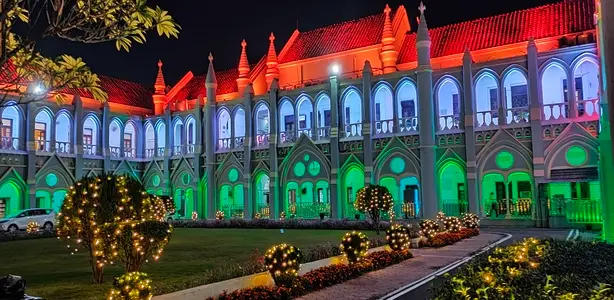


Historical Background of Madhya Pradesh and Its Judicial System
- The present state of Madhya Pradesh was originally created as the Central Provinces in the 19th century.
- It was a Judicial Commissioner's territory and was administered by the Judicial Commissioner.
- The Judicial Commissioner’s Court at Nagpur was then the highest court of that territory.
- In 1921, the territory was converted into a Governor’s Province.
- This change entitled it to have a full-fledged High Court for the administration of justice.
Reorganization of Territory Before Independence
- Berar, a region of the Nizam’s State of Hyderabad, was transferred to the Central Provinces in 1933.
- After this merger, the region came to be known as the Central Provinces and Berar.
- By virtue of the Letters Patent dated 2 January 1936, issued by King Emperor George V, the Nagpur High Court was established for Central Provinces and Berar.
- The Letters Patent under which the Nagpur High Court was constituted remained effective even after the adoption of the Constitution on 26 January 1950, due to Articles 225 and 372.
Formation of Central Provinces and Berar & Establishment of Nagpur High Court
- In 1933, Berar, originally part of the Nizam’s State of Hyderabad, was transferred to the Central Provinces for administrative purposes.
- This merger led to the region being renamed Central Provinces and Berar.
- On 2 January 1936, Letters Patent issued under Section 108 of the Government of India Act, 1935, by King Emperor George V, established the Nagpur High Court for the Central Provinces and Berar.
- These Letters Patent, which provided the legal foundation and jurisdiction of the Nagpur High Court, continued to remain valid even after the Constitution of India came into effect on 26 January 1950, through Articles 225 and 372.
Reorganization of Madhya Pradesh and Evolution of Its High Court
- On 1 November 1956, the new state of Madhya Pradesh was formed under the States Reorganisation Act, 1956.
- According to Section 49(1) of the Act, the Nagpur High Court, which had jurisdiction over the former state of Madhya Pradesh, was legally deemed to be the High Court of the newly formed Madhya Pradesh.
- The Nagpur High Court was not abolished; it became the High Court of the new state by legal fiction, with its principal seat at Jabalpur.
- On 1 November 1956, the Chief Justice ordered the creation of temporary benches at Indore and Gwalior.
- On 28 November 1968, a Presidential Notification under Section 51(2) of the States Reorganisation Act established permanent benches at Indore and Gwalior.
- This arrangement continued until 1 November 2000, when the state of Chhattisgarh was carved out of Madhya Pradesh under the Madhya Pradesh Reorganisation Act, 2000.
- The High Court of Chhattisgarh was established with its seat at Bilaspur.
- After this division, the High Court of Madhya Pradesh at Jabalpur remained the High Court for the successor state of Madhya Pradesh.
Reorganization of Madhya Pradesh and Changes in High Court Jurisdiction
- On 1 November 1956, the new state of Madhya Pradesh was formed under the States Reorganisation Act, 1956.
- As per Section 49(1) of the Act, the Nagpur High Court—which had jurisdiction over the former state—was deemed to be the High Court of the new state of Madhya Pradesh.
- The Nagpur High Court was not abolished; it continued as the High Court of Madhya Pradesh through legal fiction, with its principal seat at Jabalpur.
- On 1 November 1956, the Chief Justice issued an order establishing temporary benches at Indore and Gwalior.
- On 28 November 1968, a Presidential Notification under Section 51(2) of the States Reorganisation Act converted these into permanent benches at Indore and Gwalior.
- This arrangement remained in effect until 1 November 2000, when Chhattisgarh was carved out of Madhya Pradesh under the Madhya Pradesh Reorganisation Act, 2000.
- The High Court of Chhattisgarh was then established with its seat at Bilaspur.
- After the division, the High Court of Madhya Pradesh at Jabalpur continued as the High Court for the successor state of Madhya Pradesh.
Early Judicial History of Madhya Pradesh
- The present state of Madhya Pradesh was originally formed as the Central Provinces in the 19th century.
- It was initially administered as a Judicial Commissioner’s territory.
- The Judicial Commissioner’s Court at Nagpur was the highest court in the territory during that period.
- In 1921, the region was converted into a Governor’s Province.
- With this change, the province became entitled to a full-fledged High Court for the administration of justice.